
Showing 37–45 of 173 results
-
4%
₹1,250.00Original price was: ₹1,250.00.₹1,200.00Current price is: ₹1,200.00. -
3%
CARDIAC RISK MARKERS – ADVANCED
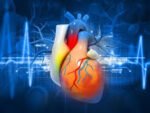
Indians are at very high risk of developing Atherosclerotic Cardiovascular disease (ASCVD), they usually get the disease at an early age, have a more severe form of the disease and have poorer outcome as compared to the western populations. This is due to high prevalence of Atherogenic dyslipidemia, central abdominal adiposity & increased transfats in our diet. Among the various risk factors for ASCVD such as dyslipidemia, Diabetes mellitus, sedentary lifestyle, Hypertension, smoking, genetic predisposition etc., dyslipidemia has the highest population attributable risk for MI. Hence monitoring lipid profile regularly for effective management of dyslipidemia remains one of the most important healthcare targets for prevention of ASCVD. This monitoring should start as early as 20 years of age. Lipid association of India (LAI 2020) has categorized individuals into Low risk, Moderate risk, High risk, Very high risk & Extreme risk on the basis of their LDL-C, Non-HDL-C & ApoB blood levels. Use of lipid lowering drugs particularly statins has reduced ASCVD morbidity and mortality; however significant residual risk for the events remains. Additional testing for inflammatory (HsCRP), non-lipid (Homocysteine) and other lipid biomarkers (Apo A, Apo B & Lp(a) ) may be considered for risk refinement. Presence of one or more secondary risk factor should prompt the clinician to consider drug therapy for patient whose atherogenic cholesterol level is higher than goal level.
₹1,550.00Original price was: ₹1,550.00.₹1,500.00Current price is: ₹1,500.00. -
15%

CARDIOMETABOLIC SYNDROME PANEL
Cardiometabolic syndrome represent a cluster of interrelated risk factors, primarily hypertension, elevated fasting blood sugar, dyslipidemia, abdominal obesity and elevated triglycerides. Cardiometabolic health has emerged as a concern due to increasing trend in development of Obesity and Metabolic syndrome which are independent risk factors for Cardiovascular Diseases and other complications. The two most important risk factors defined by National Heart, Lung and Blood Institute are Central obesity and Insulin resistance. Other risk factors include age, family history, lack of exercise and Polycystic Ovarian Syndrome. Metabolic syndrome increases the risk of development of Type 2 Diabetes Mellitus, Cardiovascular complications like Atherosclerosis, Peripheral Vascular Disease, Heart attack, Stroke as well as Non Alcoholic Fatty Liver Disease (NAFLD). The syndrome is typically asymptomatic thus it is recommended to measure additional biomarkers associated with insulin resistance.
₹3,200.00Original price was: ₹3,200.00.₹2,700.00Current price is: ₹2,700.00. -
2%
CATECHOLAMINES, PLASMA
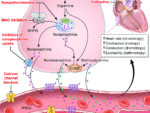
Catecholamines are a group of hormones that are released in response to stress. They are produced by the adrenal glands and nerve tissue, including the brain.Types of catecholamines dopamine, epinephrine (adrenaline), and norepinephrine (noradrenaline).How they work-
- Catecholamines enter the bloodstream and trigger the body’s “fight or flight” response
- This response increases blood flow to the brain and muscles, increases heart rate and blood pressure, and increases alertness
- The body eliminates the remaining waste through urine
Abnormal catecholamine levels- High levels of catecholamines can cause high blood pressure, headaches, sweating, rapid heart rate, and anxiety
- Low or high levels of catecholamines can indicate an underlying health issue, such as a tumor
Catecholamine tests- A urine or blood test can measure the amount of catecholamines in the body
- These tests can help check for certain tumors
₹8,000.00Original price was: ₹8,000.00.₹7,800.00Current price is: ₹7,800.00. -
-
2%
CATECHOLAMINES, PLASMA
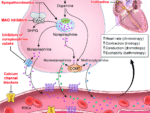
Catecholamines are a group of hormones that are released in response to stress. They are produced by the adrenal glands and nerve tissue, including the brain.Types of catecholamines dopamine, epinephrine (adrenaline), and norepinephrine (noradrenaline).How they work-
- Catecholamines enter the bloodstream and trigger the body’s “fight or flight” response
- This response increases blood flow to the brain and muscles, increases heart rate and blood pressure, and increases alertness
- The body eliminates the remaining waste through urine
Abnormal catecholamine levels- High levels of catecholamines can cause high blood pressure, headaches, sweating, rapid heart rate, and anxiety
- Low or high levels of catecholamines can indicate an underlying health issue, such as a tumor
Catecholamine tests- A urine or blood test can measure the amount of catecholamines in the body
- These tests can help check for certain tumors
₹8,000.00Original price was: ₹8,000.00.₹7,800.00Current price is: ₹7,800.00. -
-
11%

CHLAMYDIA TRACHOMATIS PCR
The Chlamydia Trachomatis PCR test is a rapid and sensitive method to detect Chlamydia trachomatis bacteria in a sample, usually a swab from the genital area or urine. This test amplifies and detects the bacteria’s DNA, making it a highly accurate diagnostic tool.
Here’s a more detailed explanation:
What it detects:
The PCR test identifies the presence of Chlamydia trachomatis by amplifying specific DNA sequences of the bacteria.
How it’s done:
A sample, like a swab from the genital area or a urine sample, is taken and processed to extract the DNA. Then, a PCR reaction amplifies a specific DNA region of the Chlamydia bacteria.
Why it’s used:
This test is used when someone has symptoms of chlamydia, such as unusual discharge or pain during urination, or as part of routine STI screening.₹4,500.00Original price was: ₹4,500.00.₹4,000.00Current price is: ₹4,000.00. -
11%

CHLAMYDIA TRACHOMATIS PCR
The Chlamydia Trachomatis PCR test is a rapid and sensitive method to detect Chlamydia trachomatis bacteria in a sample, usually a swab from the genital area or urine. This test amplifies and detects the bacteria’s DNA, making it a highly accurate diagnostic tool.
Here’s a more detailed explanation:
What it detects:
The PCR test identifies the presence of Chlamydia trachomatis by amplifying specific DNA sequences of the bacteria.
How it’s done:
A sample, like a swab from the genital area or a urine sample, is taken and processed to extract the DNA. Then, a PCR reaction amplifies a specific DNA region of the Chlamydia bacteria.
Why it’s used:
This test is used when someone has symptoms of chlamydia, such as unusual discharge or pain during urination, or as part of routine STI screening.₹4,500.00Original price was: ₹4,500.00.₹4,000.00Current price is: ₹4,000.00. -
14%
₹3,500.00Original price was: ₹3,500.00.₹3,000.00Current price is: ₹3,000.00. -
14%
₹3,500.00Original price was: ₹3,500.00.₹3,000.00Current price is: ₹3,000.00.
